The counting machines are our company’s star products, which is a stable and reliable electronic products. It was successfully developed through repeated experiment after a long time research. lts core part and control system adopt imported original accessories. it mainly consists of such structures as hopper, vibration transmission, photoelectric sensor dust storage box, human-computer interface. The counting machine with automatic photoelectric sensor counting and has pre-counting function, the error of bottling is less than nation standard.
This equipment is designed for high-capacity automated counting and bottle filling in pharmaceutical and nutraceutical manufacturing. It integrates high-sensitivity photoelectric scanning technology to monitor material geometry and quantity in real-time during high-speed production. The core drive and control components utilize a modular architecture to ensure operational reliability.
Material Compatibility: Engineered for the automated packaging of 0-5# capsules, various soft capsules, tablets (Φ5.5–20mm), and pills (Φ3–12mm).
Throughput Capacity: Capable of processing 20-120 bottles per minute depending on material specifications. The system incorporates an automatic pre-counting and diversion mechanism to minimize fill-count variance, meeting established industry standards.
Process Reliability: Features a multi-stage vibration feeding system to ensure consistent material flow into the counting lanes, preventing material overlap or jamming.
Hygiene and Maintenance: Equipped with an integrated negative-pressure dust extraction system to remove debris and particulates generated during production, ensuring a clean operational environment.
Control System: Features a digital interface for parameter configuration, enabling precise adjustments for specific material characteristics, along with real-time monitoring and diagnostic functions.
Applicable bottle shape: round、 square plastic bottle Filling material:0~5#capsule、soft capsule、Φ5.5~20 tablet,Φ3~12pill Production capacity:20-120 bottles per minute The setting range of bottling volume:1-9999 Power supply: AC220V 50Hz 2.5kw Accuracy rate:>99.5%(higher than the industrial standard Air pressure:0.6Mpa Overall dimension:1960×1650×1650mm Weight:650kg
Selecting a lane count is one of the few packaging-line decisions that quietly sets the ceiling on everything downstream — shift length, staffing pattern, and how many product sizes a single line can realistically rotate through in a day. The 48-lane platform sits at the upper end of Jianfeng's counting range, built for plants where a single shift needs to clear the same bottle volume that a smaller unit would need two or three shifts to reach. Facilities usually arrive at a 48-lane machine after outgrowing something smaller rather than starting there — a private-label brand adding new accounts, a contract packager consolidating several smaller lines into one, or a plant preparing for a product launch with a fixed delivery date. Rather than repeating the equipment specification already listed on this page, the sections below focus on how to decide whether 48 lanes is the right number for a given operation, how the counting cycle behaves once dozens of channels are running in parallel, and how the machine fits into the rest of a bottling line.
48
Counting Lanes Running in Parallel
20–120
Bottles Filled per Minute, Depending on Product
99.5%
Minimum Count Accuracy
1–9999
Adjustable Target Count per Bottle
Matching Lane Count to Real Production Volume
Lane count and daily output are related, but not in a straight line. Doubling the number of counting channels does not double real-world throughput, because bottle handling speed downstream, changeover time between products, and how evenly a hopper feeds all channels at once all place a ceiling on what extra lanes can deliver. In practice, most plants size a counting machine around three questions: how many bottles need to leave the line in a normal shift, how many different bottle sizes or fill counts run through that same line in a typical week, and how much floor length is available before and after the counter for accumulation tables, cappers, and labelers.
8-Lane
Pilot / Single-SKU
12–16-Lane
Mid-Volume Contract Runs
24-Lane
One–Two Shift Plants
32-Lane
Multi-Shift Consolidation
48-Lane
High-Volume / Near-Continuous
The table below fills in the detail behind each bar above — the kind of operation each lane count is typically matched to, based on how these machines are actually used across pharmaceutical and nutraceutical packaging floors.
Lane Count
Typical Operation Profile
Changeover Frequency
Usual Role on the Line
8-Lane
Small-batch or single-SKU runs, pilot lines, early-stage private label
Multi-shift plants consolidating from two smaller lines
Lower, batched changeovers
Feeds a full capping–sealing–labeling line
48-Lane
High-volume single-shift or near-continuous operations
Scheduled, grouped by product family
Central counting station for a full automated line
None of these bands are strict cutoffs. A facility running a narrow product range with long batch runs can outgrow an 8-lane machine well before volume alone would suggest it, simply because changeover downtime eats into available run time. Conversely, a 48-lane machine running one dominant product with rare changeovers spends more of its potential capacity actually counting rather than resetting. The more useful question is usually not "how many bottles per day" in isolation, but how many separate product changeovers a line absorbs in a week — because changeover time, not raw lane count, is what most often decides whether a plant feels like it has enough capacity.
Signs a Packaging Floor Has Outgrown a Smaller Counter
Overtime Has Become the Default
When a facility consistently needs an extra hour or two past the scheduled shift to clear the day's bottling target, it is rarely a staffing problem — it is usually a channel-count problem. A smaller machine running near its ceiling for months tends to show up first as overtime, then as missed ship dates once order volume climbs any further. Moving to a 48-lane platform doesn't just add speed; it gives a plant enough headroom that a normal production hiccup doesn't automatically turn into a late shipment.
One Line Now Carries Several Product Families
Plants that started with a narrow product range often end up running capsules, tablets, and pills of several diameters through the same line as their customer base grows. Every one of those transitions on an undersized machine means a changeover, and changeovers are dead time no matter how efficient the crew is. A higher lane count doesn't eliminate changeovers, but it reduces how often a plant has to trade one more short batch against simply pushing an order to the next day.
Operators Are Re-Checking Counts by Hand
A counting machine pushed past a comfortable operating range for its lane count tends to produce more borderline fills — bottles close enough to the target that an operator feels the need to hand-check a sample before it moves to capping. That extra step is a reasonable safeguard occasionally, but if it has become a routine part of every shift, it is usually a sign the machine is working harder than its design range intends.
Growth Plans Depend on a Line Not Yet Sized
Some of the clearest cases for a higher-lane machine are not about a current bottleneck at all — they are about a contract that hasn't started yet, or a private-label customer who has said they intend to double order volume next year. Sizing a counting machine for where a plant is going, rather than exactly where it is today, avoids the more disruptive path of replacing equipment again within a year or two.
How Counting Capacity Scales Across the Lane Range
Because lane count, changeover frequency, and bottle handling speed all interact, it helps to see how theoretical counting capacity scales across the range rather than looking at the 48-lane figure in isolation. The chart below illustrates the general scaling pattern seen across multi-lane photoelectric counters as channel count increases: capacity grows quickly through the smaller end of the range, then bends as downstream bottle handling — not the counting channels themselves — becomes the limiting factor. These figures are illustrative rather than a substitute for the rated capacity of any specific model; actual throughput always depends on capsule or tablet size, target fill count, bottle neck diameter, and how evenly the upstream hopper feeds all channels.
Illustrative Capacity Scaling by Lane Count
Relative capacity index, illustrative only — confirm rated output for a specific model and product before sizing a line.
Notice how the gain between 32 and 48 lanes is proportionally smaller than the gain between 8 and 16 lanes. That bend in the curve is the same reason a plant already running a well-tuned 32-lane machine sometimes finds that jumping straight to 48 lanes delivers less improvement than expected, if the bottleneck downstream — capping speed, sealing speed, or bottle infeed — hasn't been sized to match. A 48-lane counter earns its full value on a line where capping, sealing, and labeling have already been scaled to keep pace with it; bolted onto a line built around a much slower capper, the extra channels mostly sit idle waiting for bottles to clear the next station. This is why sizing conversations around a 48-lane machine usually end up covering the whole line, not just the counter.
How the Gap Compounds Over a Full Shift
A per-minute capacity difference looks modest on paper, but it stretches out over an eight-hour shift in a way that a single snapshot number doesn't communicate well. The line chart below plots an illustrative cumulative bottle count across a shift for three lane counts, showing how a lead that looks small in the first hour becomes a meaningfully different day's total by the last hour — the gap compounds rather than staying fixed.
Illustrative Cumulative Output Across an 8-Hour Shift
24-Lane32-Lane48-Lane
Relative cumulative units, illustrative only — actual shift totals depend on product, changeover schedule, and downstream line balance.
The widening distance between the three lines is really a proxy for two compounding effects rather than one. Part of it comes from the raw channel-count difference itself, and part of it comes from a 48-lane machine simply needing fewer changeovers to hit the same daily total when a plant runs more than one product — every changeover it avoids is time the smaller machines are still spending resetting rather than counting. That second effect is often the larger of the two on lines with a mixed product schedule, which is part of why the practical difference between machines can look larger on the floor than the per-minute specification alone would suggest.
Inside the Counting Cycle, Channel by Channel
The counting principle behind a 48-lane machine is the same physical concept used across Jianfeng's smaller platforms — an interrupted light beam registering each capsule, tablet, or pill as it passes — but running 48 channels in parallel adds a layer of coordination that a single-lane or small-channel system doesn't need to manage. The sequence below breaks down what happens between a hopper filling with bulk product and a finished bottle moving on to capping.
1
Bulk Leveling Before Distribution
Before any counting happens, the hopper has to present a level, consistent bed of product to the distribution plate above the 48 channels. Uneven feeding at this stage is the single most common cause of channel-to-channel imbalance further down the line — some lanes running dry while others back up — so the leveling stage matters more to overall accuracy than the sensors themselves.
2
Splitting Flow Across 48 Parallel Lanes
A vibration tray divides the leveled product into 48 individual tracks, each narrow enough that capsules or tablets travel in single file rather than overlapping. Track width is matched to the product's format, which is part of why moving between very different capsule sizes or tablet diameters calls for a physical format-part change rather than a software setting alone.
3
Beam Interruption and Sampling Rate
As each unit crosses its lane, it briefly interrupts a light beam aimed at a photoelectric receiver, and that interruption registers as one count. At high line speeds, the sensor's sampling rate has to be fast enough to separate two products passing in close succession into two counts rather than merging them into one — a limitation tied to lane speed, not to how many lanes are running.
4
Real-Time Tally Against the Target
Each of the 48 channels reports its running count to the control system continuously rather than only at the end of a cycle. Once the combined tally approaches the target bottle count, the system shifts into a slower, more cautious feed rate for the remaining units — the same pre-counting logic used on smaller Jianfeng machines, coordinated here across a much larger number of simultaneous channels.
5
Diversion at the Target Count
When the target is reached, a diversion mechanism redirects the completed count into the funnel feeding the waiting bottle, while any product still in transit on a lane is held back for the next cycle rather than allowed to overshoot into the current bottle.
6
Clearing Fines Without Disturbing the Count
Fine dust and broken fragments generated by product moving across 48 channels at once are pulled away by the extraction system between counting cycles, timed so that airflow doesn't interfere with a channel mid-count. Keeping this extraction cycle separate from the active counting window is part of what keeps accuracy stable over a long production run, not only during the first hour after a clean start.
Where the 48-Lane Counter Sits in a Full Bottling Line
A counting machine rarely operates as a stand-alone station on a real production floor — it is usually the middle link between bulk product handling and finished, labeled bottles ready for cartoning. The way a 48-lane counter is positioned relative to the stations around it has almost as much influence on daily output as the counter's own lane count.
Bottle Infeed
Counting
Capping
Sealing
Labeling
Inspection
Bottle Infeed and Unscrambling
Empty bottles typically arrive in bulk and need to be oriented and fed into the line before reaching the counting station. A bottle unscrambler positioned ahead of a 48-lane counter keeps bottle supply from becoming the upstream bottleneck that limits how much of the counter's capacity actually gets used.
Counting and Fill Verification
This is the station covered on this page — the point where bulk capsules, tablets, or pills are measured into each bottle to the target count before it continues down the line.
Capping
Once a bottle is filled and confirmed at count, it moves directly to capping. Matching capping speed to counting speed is one of the most common line-balancing adjustments plants make when adding a 48-lane counter, since a slower capping machine downstream limits how much of the extra counting capacity is actually usable.
Induction Sealing
For products that need a tamper-evident seal beneath the cap, an induction sealer sits immediately after capping, bonding a foil liner to the bottle neck without needing to touch the cap again.
Labeling
A labeling machine applies the primary label, often followed by any secondary or tamper-band labeling the product needs, before the bottle leaves this section of the line.
Final Inspection
A metal detector is frequently the last check before cartoning, catching any foreign material or fill anomaly that made it past the counting and capping stations.
Line balancing is worth doing on paper before any equipment arrives on site. If the counting station can theoretically clear more bottles per minute than the capper or labeler positioned after it, that gap doesn't show up as wasted counting capacity in any obvious way — it shows up as bottles queuing on the conveyor between stations, an operator periodically clearing a backup, and a counter that looks underused on a floor walkthrough even though it is doing exactly what it was specified to do. Working backward from the slowest station on the planned line, rather than forward from the fastest one, is usually the more reliable way to decide what lane count actually earns its cost across the whole line rather than just at the counting step.
Hygienic Design and Changeover Considerations
Counting machines used in pharmaceutical and nutraceutical packaging sit close enough to the product that hygienic design, changeover discipline, and documentation all matter as much as raw throughput. The considerations below are the ones most frequently raised during equipment qualification and line audits for high-lane counting platforms, alongside how a properly configured 48-lane line is typically set up to address them.
Consideration
Why It Matters
Typical Configuration
Product-contact surfaces
Direct contact with capsules, tablets, or pills means finish and material choice affect cleaning validation
Contact surfaces finished and specified for pharmaceutical-grade cleaning procedures
Format part changeover
Switching product sizes without a full changeover routine can introduce cross-contamination risk between SKUs
Dedicated format parts per product family, with a documented changeover procedure between runs
Dust and fines control
Airborne particulate from high-speed counting can affect both product quality and the operator environment
Integrated extraction synchronized to the counting cycle rather than run continuously
Count accuracy logging
Audits increasingly expect a traceable record of count results, not just a stated tolerance
Digital interface records batch parameters and count results for later reference
Conformity documentation
Buyers moving equipment into regulated markets need to confirm applicable conformity marking
Documentation package available alongside the equipment for import and qualification records
Common Questions About High-Lane Counting Machines
How many bottles can a 48-lane machine realistically fill in an eight-hour shift?
There isn't one number that applies to every product, because fill count per bottle, capsule or tablet size, and how many changeovers happen during the shift all move the real total. A plant running one dominant product with minimal changeovers will see meaningfully higher output over eight hours than one rotating through several products on the same machine. The most reliable way to estimate a realistic shift total is to look at rated capacity for the specific product being run, then subtract time for the changeovers and breaks that shift actually includes.
Does switching between capsules and tablets require replacing parts every time?
Generally yes, if the size difference is significant enough that the counting lanes and chutes need to be re-matched to the new product's dimensions. Some ranges of similar sizes can share format parts, but a jump from a small capsule to a large tablet typically calls for a physical changeover rather than a setting adjusted from the control interface alone.
What actually causes miscounts on a high-speed counting machine?
Most miscounts trace back to uneven hopper feeding rather than a fault in the sensors themselves. If one lane is starved of product while another is overloaded, the imbalance can create partial fills or overshoot on individual lanes even while the combined total looks correct at a glance. Static buildup on certain capsule coatings and product with inconsistent shape are the other common contributors, which is part of why format parts are matched closely to a specific product rather than used generically across sizes.
How often should format parts and sensors be checked?
Format parts typically get a visual inspection at each changeover, since that is already a natural pause point in production, with a more thorough check on a scheduled interval — often monthly on lines running near-continuous shifts. Sensors rarely need physical maintenance but benefit from a periodic cleaning cycle, since a dust film building up on a lens over weeks of continuous running can gradually affect sampling reliability before it becomes an obvious count error.
Is a 48-lane machine excessive for a plant running around 15,000 bottles a day?
It depends heavily on how many different products move through that volume and what growth is already planned. A single-shift operation running one steady product at that volume may find a 32-lane machine more proportionate, while a plant running the same daily total across several product families — with the changeover downtime that implies — often gets more practical benefit from the extra headroom a 48-lane platform provides, even at a similar total bottle count.
Can a 48-lane counter be added into a line built around equipment from a different manufacturer?
In most cases yes, as long as bottle handling interfaces — infeed height, bottle neck diameter range, and conveyor speed — are compatible or can be adjusted to match. Lines built from equipment across several sources are common in this industry; the practical work is usually in matching conveyor heights and timing signals between stations rather than in the counting machine itself.
What is the difference between pre-counting and the final count?
Pre-counting is the stage where the system slows the feed rate as the tally approaches the target, reducing the chance of overshoot on the last few units. The final count is the confirmed total once the diversion mechanism closes off that cycle. Pre-counting exists specifically to protect the final count's accuracy — without it, a fast-moving lane could overshoot the target by the time the system registers that the count had been reached.
Questions Worth Answering Before Specifying a 48-Lane Line
1
Confirm the full size range. List every capsule, tablet, and pill size the line needs to run today, plus anything reasonably expected within the next year or two, since format part planning depends on the full range rather than the current best-seller alone.
2
Measure real floor length. Account for accumulation space before and after the counter, not just the footprint of the machine itself — a 48-lane counter feeding directly into a slower capper will need buffer space to avoid bottles backing up mid-line.
3
Verify utility supply. Confirm plant power and compressed air specifications match what the equipment requires before installation day, since air pressure in particular affects diversion and dust extraction performance.
4
Plan format part inventory. Decide up front which product sizes will share a changeover kit and which need dedicated parts, so changeover time doesn't become the new bottleneck once the counting speed problem is solved.
5
Request a trial run on your own product. Rated capacity figures are a starting point; a trial run using the actual capsule, tablet, or pill going into production gives a far more reliable sense of real throughput and count accuracy for that specific product.
6
Clarify training and changeover support. Since format changeovers happen more often on a line running multiple products, confirm what training or documentation is provided so changeovers can be handled by floor staff rather than requiring a specialist each time.
7
Walk through the whole line, not just the counter. Sketch out infeed, counting, capping, sealing, labeling, and inspection together before finalizing a lane count, since a mismatch anywhere in that sequence changes how much of the counter's rated capacity a plant actually gets to use day to day.
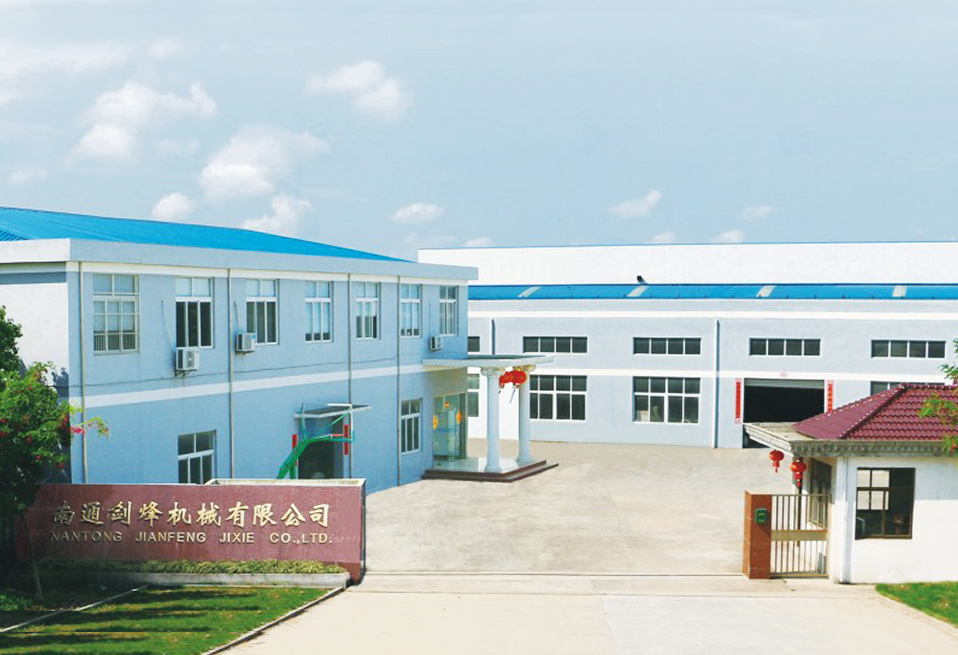
Nantong Jianfeng Machinery Co., Ltd. is a professional engaged in research and development, production, management of pharmaceutical and food machinery, science and technology enterprises. Founded in 2010, covers an area of 12000 squaremeters,construction area of 6000 square meters. With the professional design, R&D, manufacturing and installaton and commissioning team, has developed into a certain scale pharmaceutica supplier.
As China JF-48 lane high-speed counting machine Suppliers and JF-48 lane high-speed counting machine Factory, Jianfeng Machinery has constantly transformation in recent years, product innovation, independent R & D and production of Cotton Stuffing Machine, Counting & bagging machine, Automatic machine for cotton ball, multifunctional labeling machine, capping(pressing) machine and etc,. In 2015 had passed the CE, ISO product certification, 2016 went on and certified 7 utility model patent issued by the State Property Bureau. We have been favored by customers with professional technology, high-quality products, professional manufacturing processes, outstanding management and intimate service, and won wide domestic and foreign markets.
We are located in Wujia industrial park, Tongzhou district .Nantong cityJiangsu province. Close to Shanghai, superior position and convenient trafic. ln this area full of opportunities, customers needs are the foundation of our survival and meeting customers needs is the driving force of our development. By holding the business philosophy of “customer centered, serving customers whole-heartedly” and sticking to the principle of “advanced technology ,elaborate manufacturing,truth-seeking and pragmatism, considerate service” ,our company provides high quality products and sincere service for customers. Our survival and development space will become wider only through continously innovating and surpassing ourselves.



 English
 Français
 русский
 Español
 中文简体




 +86-159 6291 3930
 +86-513-86205069

 Wujia Industrial Park, Dongshe Town, Tongzhou District, Nantong City Jiangsu Province, China
