The bottle came from the previous equipment stay in the bottling position, waiting to be filled in. The medicine goes into the pre-counting function storage bin orderly by the vibration of the feeding corrugated plate. Then fall into the medicine bin through the pre-counting function are quantitatively counted by the photoelectric counting sensor and then loaded into the bottle at the bottling position
Applicable bottle shape: round、 square plastic bottle Filling material:0~5#capsule、soft capsule、Φ5.5~20tablet,Φ3~12pill Production capacity:20-110 bottles per minute The setting range of bottling volume:1-9999 Power supply: AC220V 50Hz 2.2kw Accuracy rate:>99.5%(higher than the industrial standard Air pressure:0.6Mpa Overall dimension:1860×1650×1650mm Weight:620kg
JF-32 Lane Capsule Counting Machine: Built for High-Volume Bottling Lines
The JF-32 lane capsule counting machine is a photoelectric-sensor-driven filling system designed by Nantong Jianfeng Machinery for pharmaceutical, nutraceutical and health-supplement producers that need to fill a steady stream of bottles without slowing down for recounts. Built around 32 parallel counting channels, it sits in the middle of Jianfeng's counting line-up: large enough to move real production volumes, compact enough to fit into a mid-size cleanroom without the footprint and cost of a 48-lane high-speed platform.
Manufacturers reach for this configuration when order volumes have outgrown a tabletop or semi-automatic counter but a full high-speed line is still more machine than the SKU mix requires. It is a common fit for contract packagers running mixed batches, private-label supplement brands scaling toward export markets, and generic drug producers who need a documented, repeatable count on every bottle that leaves the line.
What follows on this page goes beyond the core specification sheet above. It covers how the counting cycle actually runs from bottle to bottle, what keeps 32 independent lanes reading the same way hour after hour, how this configuration stacks up against smaller and larger machines in the same range, and the questions engineers most often ask before they commit to a production line design. If a figure below differs slightly from a spec sheet elsewhere on this site, treat it as a planning range rather than a fixed number — always confirm the exact configuration against your product before ordering.
Process Walkthrough
Inside the Counting Cycle: From Bulk Capsules to a Fill-Ready Bottle
Every bottle that passes under the JF-32 goes through the same six-stage cycle. Understanding each stage makes it easier to see where accuracy is actually protected — it is not one sensor doing all the work, but a sequence of mechanical and optical checks that each remove a different source of error.
1
Empty Bottle Positioning
An empty bottle arrives from the upstream station — typically a bottle unscrambler or labeling machine — and indexes into place directly beneath the filling head, ready to receive its dose of capsules or tablets.
2
Vibratory Feeding
Bulk capsules are loaded into the hopper, where a corrugated vibration plate spreads them into a thin, orderly stream and routes them into 32 individual feed channels running in parallel.
3
Pre-Counting Buffer
Each lane feeds a small pre-counting storage bin. This buffer keeps a constant supply queued at the sensor gate, so a momentary gap in the vibration feed never shows up as a miscount downstream.
4
Photoelectric Detection
As each capsule crosses the gate, a photoelectric sensor pair on that lane registers the interruption in the light beam. All 32 lanes report independently and in real time to the control system.
5
Quantitative Release
Once the running total across all lanes reaches the operator-set target — anywhere from 1 to 9,999 units — the gate closes and the counted batch drops into the waiting bottle at the bottling position.
6
Bottle Indexing & Handoff
The filled bottle indexes forward to the next process, whether that is capping, induction sealing, labeling, or simply a takeaway conveyor feeding a manual pack-out table.
None of these six stages runs in isolation. The pre-counting buffer in stage three exists specifically to protect stage four: if the vibration feed briefly slows because the hopper is running low, the buffer keeps enough product staged at the sensor gate that the counting rate does not stall or stutter. That is a deliberate design decision, not an incidental one — a machine that counts accurately only when the hopper is full is not particularly useful on a real production floor, where reloads happen mid-shift and feed rates are never perfectly even.
Engineering Notes
The Technology That Keeps Every Lane Counting the Same Way
A counting machine only earns trust on a packaging floor if it counts the same way at bottle one and bottle ten thousand. A few design choices in the JF-32 exist specifically to hold that line:
Independent per-lane sensing. Each of the 32 lanes has its own photoelectric trigger rather than sharing a single detector across channels, so a partial blockage on one lane does not skew the total count.
PLC and HMI-based control. Target count, lane balance and cycle timing are all set through the human-machine interface rather than mechanical dials, which means a changeover between SKUs is a data entry task, not a mechanical rebuild.
Pneumatic gating at 0.6MPa. Air-actuated gates open and close fast enough to keep pace with a 20–110 bottle-per-minute cycle without the wear pattern of a purely mechanical shutter.
Stainless steel product-contact surfaces. Hoppers, chutes and gates that touch the product are built in SUS304 stainless, which supports cleaning validation and reduces the risk of cross-contamination between batches.
Adjustable lane width. The lane geometry accommodates a wide product range in one machine — 0# to 5# capsules, soft capsules, tablets from about 5.5 to 20mm, and pills from about 3 to 12mm — without swapping to a different machine for a different format.
Enclosed feed path. Capsules and tablets travel through covered channels from hopper to bottle, limiting exposure to ambient dust and airborne particulate between the vibration feeder and the fill point.
Real-time lane monitoring. The control system tracks each lane's contribution to the running total rather than only the final sum, which makes it possible to flag a single underperforming lane instead of treating an entire batch as suspect.
Together, these choices are what let the machine hold an accuracy rate above 99.5% — a figure that matters less as a marketing number and more as a description of how rarely a bottle needs to be pulled off the line and recounted by hand. On a line running continuously across an eight-hour shift, that difference between 99% and 99.5% accuracy is the difference between a handful of bottles flagged for a manual recheck and dozens of them — a gap that compounds quickly once it is measured against a full day's output rather than a single test run.
It is also worth noting what the technology does not do. A photoelectric counting sensor confirms that a physical object passed the gate; it does not weigh, inspect or grade that object. Facilities that need weight verification or visual defect detection on top of counting typically pair a lane counter like the JF-32 with a separate checkweigher or vision inspection station further down the line, rather than expecting the counting machine itself to perform both jobs.
Capacity Planning
Where the 32-Lane Model Sits in the Counting Line-Up
Lane count is the single biggest lever on throughput. Doubling the number of parallel counting channels does not exactly double the bottle-per-minute rate — bottle handling and indexing time set a practical ceiling — but it does move the machine into a different production bracket. The chart below places the JF-32 against the rest of Jianfeng's capsule and tablet counting range.
Reading this chart is less about picking the tallest bar and more about matching a bracket to a real order pattern. A facility filling small trial batches or running frequent short SKU changeovers often gets more practical use out of an 8- or 12-lane machine, where changeover speed matters more than raw ceiling output. A facility filling long, steady runs of a single product benefits more from pushing toward the 32- or 48-lane end of the range, where the extra lanes translate directly into fewer labor-hours per thousand bottles produced.
Approximate output range (bottles/minute)
Figures shown are indicative maximum output ranges (bottles/minute) across the JF counting-machine series, for capacity-planning reference only. Actual throughput depends on capsule or tablet size, fill count per bottle, and bottle format — contact our engineers for a specification matched to your exact product.
Why Automated Counting Holds Its Accuracy Through a Full Shift
Manual counting is not inaccurate because people are careless — it is inaccurate because sustained, repetitive visual counting is a task that human attention naturally degrades on over hours. A photoelectric sensor does not get tired at hour six of a shift the way a counting technician does. The chart below illustrates that general pattern conceptually, comparing a typical manual-counting accuracy drift against the flat, sensor-driven accuracy curve of the JF-32.
JF-32 automated countingManual hand counting (typical pattern)
Conceptual illustration only, reflecting a general pattern seen in high-volume packaging operations rather than measured data from a specific facility. Individual results vary by operator, shift length and product complexity.
The practical takeaway is not that manual counting is unusable — plenty of small-batch and prototype runs still rely on it — but that the accuracy gap tends to widen as shift length and total unit count grow. A line running a few hundred bottles a day can often absorb the occasional manual miscount without much consequence. A line running several thousand bottles a day cannot absorb the same error rate without it showing up as a measurable cost in rework, complaints or regulatory findings, which is the point at which most manufacturers start pricing out an automated lane counter.
Where It's Used
Industries That Put the JF-32 to Work
Pharmaceutical Manufacturing
Prescription and over-the-counter tablet and capsule producers use lane counting to keep pace with regulatory batch-record requirements while filling bottles fast enough to meet distribution schedules. Consistent per-bottle counts also reduce the paperwork burden tied to reconciling filled quantities against raw material usage at the end of a batch.
Nutraceuticals & Vitamins
Private-label supplement brands running frequent SKU changes rely on the settable 1–9,999 count range to switch between a 60-count bottle and a 180-count bottle without retooling the machine. That flexibility matters most for brands that manufacture on behalf of several retail clients, each with a different bottle size and count on their packaging artwork.
Veterinary Medicine
Animal health producers count tablets and capsules across the same size range used in human medicine, often on smaller production runs where a 32-lane machine still leaves useful headroom for future volume growth without an early upgrade to a higher-lane platform.
Traditional Chinese Medicine (TCM)
Pill and small-capsule TCM products, with their wide variety of pack sizes, benefit from a machine that can be reprogrammed for a new count target in minutes rather than hours, which matters on production floors that run dozens of distinct formulations through the same line.
Contract & Export Packaging
Producers filling bottles for overseas distributors need a documented, repeatable count on every unit — a requirement that a photoelectric counting record satisfies more consistently than a manual tally sheet, particularly when the finished goods travel through several hands before reaching a retail shelf.
Multi-Format Product Lines
Facilities running capsules, soft capsules, tablets and pills on rotating schedules avoid keeping several dedicated counters by standardizing on one machine that spans that whole size range, freeing up floor space and simplifying operator training to a single interface.
At a Glance
What a 32-Lane Configuration Actually Buys You
It is easy to read "32 lanes" as just a bigger number. In practice, the lane count changes three things about how the line runs day to day: how fast bottles move, how forgiving the machine is of mixed batch sizes, and how much floor space the whole station needs relative to its output.
32Parallel counting lanes reduce the queue at the bottling station compared with lower-lane models
20–110Bottles per minute, depending on fill count and bottle format
1–9,999Settable count range covers everything from sample bottles to bulk-fill containers
>99.5%Accuracy rate, above common industry benchmarks for photoelectric counting
Before It Ships
Quality Control Checkpoints Built Into Every Unit
Accuracy on the packaging floor starts with what happens on the assembly floor first. Before a JF-32 leaves the Nantong factory, it goes through a staged inspection process rather than a single final check:
Checkpoint
What Is Verified
Standard Applied
Incoming component inspection
Photoelectric sensors, pneumatic valves, motors and control boards
Cross-checked against supplier certification before assembly
Per-lane sensor calibration
Trigger threshold on each of the 32 independent lanes
Zero-tolerance miscount test on sample product runs
Endurance run
Continuous operation at rated line speed
Extended multi-hour test cycle before release
Accuracy sampling
Random bottle counts checked against the programmed target
Must clear the >99.5% accuracy threshold
Electrical & dimensional check
Wiring, grounding, enclosure fit and overall footprint
CE compliance checklist
All units carry CE and ISO product certification, backed by utility model patents issued for Jianfeng's counting and bottling equipment designs.
Configuration
Options Manufacturers Commonly Request
The standard JF-32 configuration covers most round and square plastic bottle formats out of the box, but production lines rarely look identical to each other. The table below lists the adjustments most frequently requested during quotation:
Element
Standard Build
Common Customization
Hopper capacity
Standard capsule/tablet hopper
Oversized hopper for longer unattended runs between reloads
Bottle handling
Round and square plastic bottles
Guide rail adjustment for glass or HDPE bottle formats
Control panel language
Chinese / English HMI
Additional language packs to match the destination market
Line integration
Standalone counting station
Inline connection with capping, induction sealing and labeling stations
Product-contact parts
SUS304 stainless steel
Additional surface finishing and documentation package on request
Choosing a Counting Method
Manual Counting, Desktop Counters, and the JF-32: How They Compare
Not every production line needs a 32-lane machine on day one. It usually becomes the right choice at a specific point — when order volume outpaces what a desktop counter or a manual counting table can reliably keep up with.
Method
Typical Speed
Labor Requirement
Accuracy Behavior Over a Shift
Manual hand counting
Roughly 1–2 bottles/min per worker
One dedicated worker per counting station
Tends to drift as fatigue builds over long shifts
Semi-automatic desktop counter
Roughly 5–15 bottles/min
One operator loading and unloading
Steady, but throughput-limited by manual handling
JF-32 lane counting machine
20–110 bottles/min
One operator can oversee multiple stations
Consistent across a full production shift
Factory & Support
From the Nantong Factory Floor to an Installed, Running Line
Nantong Jianfeng Machinery has designed and built pharmaceutical and food packaging equipment since 1984, from a 12,000-square-meter facility with in-house research, manufacturing, installation and commissioning teams. That background shapes how the JF-32 is supported after it leaves the factory, not just how it is built:
Certified for International Deployment
CE and ISO product certification, along with utility model patents on core mechanisms, support import and compliance documentation for overseas clients bringing the machine into a regulated facility.
Multi-Language Commissioning
Operation manuals and HMI language packs are prepared to match the destination market, reducing the training gap for line operators who are not native Chinese or English speakers.
Spare Parts Continuity
Wear parts — sensors, pneumatic components, feed channels — are stocked and manufactured in-house, avoiding the long lead times that come with sourcing through a third-party integrator.
Remote & On-Site Commissioning
Initial setup and troubleshooting can be handled remotely for straightforward cases, with on-site commissioning support available for full-line installations tied to capping, sealing and labeling equipment.
Running Cost
Maintenance Routine and What It Means for Total Cost of Ownership
The purchase price of a counting machine is only part of what it costs to run over several years. Downtime, wear-part replacement and operator training all factor into how a 32-lane counter compares to cheaper, slower alternatives once it has been running for a full production season. The routine below reflects a typical maintenance rhythm for this class of equipment:
Interval
Task
Purpose
Daily
Visual check of hopper, feed channels and bottle guides for product residue
Prevents buildup that can affect vibration feeding consistency
Weekly
Photoelectric sensor lens cleaning across all 32 lanes
Maintains detection accuracy by preventing dust film on the sensor pairs
Monthly
Pneumatic system inspection — air pressure, gate response time
Confirms the 0.6MPa gating system is cycling within spec
Quarterly
Full accuracy verification run against a known sample count
Documents ongoing conformance to the >99.5% accuracy target
Annually
Motor, bearing and wear-part inspection with replacement as needed
Extends operating life and reduces the chance of unplanned downtime
None of these tasks require specialized outside contractors — they are designed to sit within a normal in-house maintenance schedule, with spare parts sourced directly from the manufacturer rather than a third-party supplier. Facilities that follow this rhythm typically see the counting station become one of the more predictable pieces of equipment on the line, rather than one of the more troublesome ones.
Before You Order
Working Out Whether the JF-32 Is the Right Lane Count
Lane count is the first decision, but it is rarely made in isolation. Before finalizing a configuration, it helps to have clear answers to a short list of production questions — the same questions our engineers typically ask during a specification review:
A
What is your peak daily bottle volume?
Size the machine against your busiest realistic day, not your average day, so the line does not become the bottleneck during seasonal or promotional demand spikes.
B
How often do you change SKUs?
Frequent changeovers favor a configuration where reprogramming the count target and swapping bottle guides can be done quickly between short runs.
C
What is your available floor space?
A higher-lane machine delivers more output per operator-hour, but only if the facility has room for its footprint and any inline equipment it will connect to.
D
Do you need multi-language operation?
Facilities staffing lines with operators who are not fluent in Chinese or English should confirm HMI language support before finalizing an order.
E
Will this connect to existing equipment?
Confirm bottle dimensions and conveyor heights against any capping, sealing or labeling machines already on the line to avoid integration surprises later.
F
What certification documentation do you need?
Regulated markets often require CE, ISO or material certification paperwork to be finalized before the equipment can clear import review.
Common Questions
Frequently Asked Questions About the JF-32
How many bottles can the JF-32 fill per minute?
Between roughly 20 and 110 bottles per minute. The exact rate depends on how many capsules or tablets are being counted into each bottle and how large the bottle format is — a low fill-count bottle moves through the line faster than a high fill-count bottle.
What capsule, tablet and pill sizes fit this machine?
The standard channel geometry handles 0# through 5# capsules, soft capsules, tablets from about 5.5mm to 20mm in diameter, and pills from about 3mm to 12mm, all on the same 32-lane platform without switching machines.
Can the count target be changed between production batches?
Yes. The target count is set through the HMI and can be programmed anywhere from 1 to 9,999 units per bottle, which makes it straightforward to switch between a small sample-size bottle and a large bulk-fill bottle on the same machine.
How does the JF-32 compare to the JF-48 high-speed model?
The JF-48 adds more parallel lanes and is built for the largest production volumes, where floor space and equipment budget are less of a constraint than raw throughput. The JF-32 is generally the better fit for facilities that need a meaningful step up from a desktop counter without committing to the largest platform in the range.
What utilities does the JF-32 require on the plant floor?
A single-phase AC220V 50Hz power supply rated at 2.2kW, compressed air at 0.6MPa for the pneumatic gating system, and floor space to accommodate its footprint of roughly 1860 × 1650 × 1650mm at an operating weight of about 620kg.
Does the machine meet certification requirements for regulated markets?
The JF-32 carries CE and ISO product certification and is built with SUS304 stainless steel product-contact parts, which supports the documentation many regulated pharmaceutical and supplement facilities require during equipment qualification.
Can the JF-32 be connected to other packaging equipment?
Yes. It is commonly installed inline with an upstream bottle unscrambler and downstream capping, induction sealing and labeling machines to form a continuous bottling line rather than operating as an isolated station.
How often does the counting accuracy need to be re-verified?
A quarterly accuracy verification run against a known sample count is a common practice, with sensor lens cleaning performed weekly to prevent gradual drift caused by dust buildup on the detection window.
Is operator training required to run the machine?
Basic operation — loading the hopper, setting a count target and starting a run — is handled through the HMI and can typically be learned quickly. Deeper maintenance and calibration tasks benefit from a short in-person or remote training session during commissioning.
What happens if a bottle is under- or over-filled?
Because the pre-counting buffer keeps each lane supplied and the gate only releases once the full target count is confirmed across all lanes, under- or over-fills are rare under normal operation. If a lane reports an interruption, the control system flags it rather than silently completing an inaccurate count.
Have a bottle format, capsule size or output target that isn't covered above? Our engineering team can size a JF-32 configuration — or recommend a different lane count from the range — against your actual production numbers.
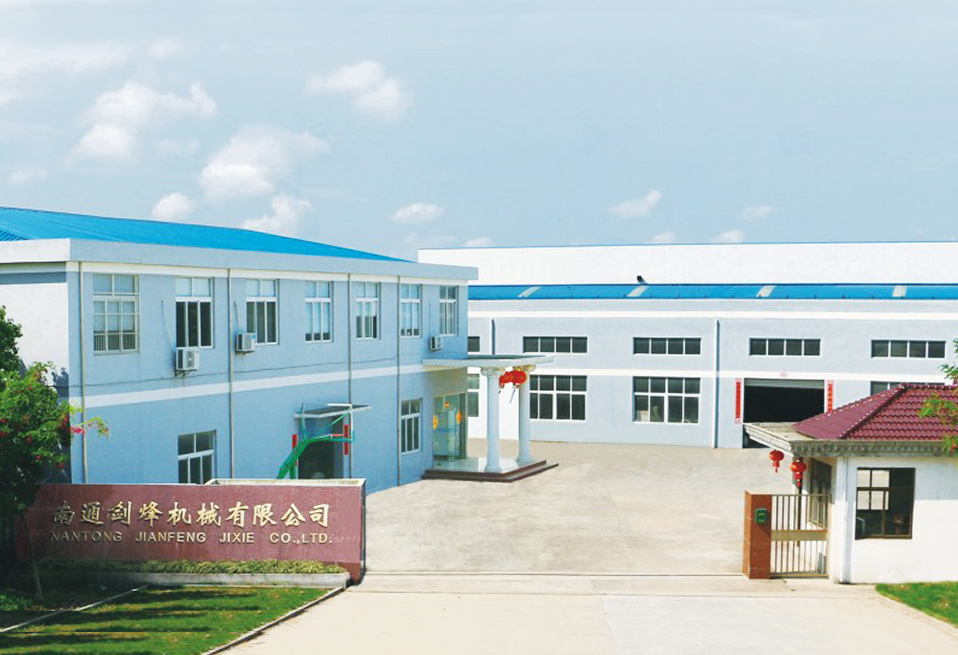
Nantong Jianfeng Machinery Co., Ltd. is a professional engaged in research and development, production, management of pharmaceutical and food machinery, science and technology enterprises. Founded in 2010, covers an area of 12000 squaremeters,construction area of 6000 square meters. With the professional design, R&D, manufacturing and installaton and commissioning team, has developed into a certain scale pharmaceutica supplier.
As China JF-32 lane capsule counting machine Suppliers and JF-32 lane capsule counting machine Factory, Jianfeng Machinery has constantly transformation in recent years, product innovation, independent R & D and production of Cotton Stuffing Machine, Counting & bagging machine, Automatic machine for cotton ball, multifunctional labeling machine, capping(pressing) machine and etc,. In 2015 had passed the CE, ISO product certification, 2016 went on and certified 7 utility model patent issued by the State Property Bureau. We have been favored by customers with professional technology, high-quality products, professional manufacturing processes, outstanding management and intimate service, and won wide domestic and foreign markets.
We are located in Wujia industrial park, Tongzhou district .Nantong cityJiangsu province. Close to Shanghai, superior position and convenient trafic. ln this area full of opportunities, customers needs are the foundation of our survival and meeting customers needs is the driving force of our development. By holding the business philosophy of “customer centered, serving customers whole-heartedly” and sticking to the principle of “advanced technology ,elaborate manufacturing,truth-seeking and pragmatism, considerate service” ,our company provides high quality products and sincere service for customers. Our survival and development space will become wider only through continously innovating and surpassing ourselves.



 English
 Français
 русский
 Español
 中文简体




 +86-159 6291 3930
 +86-513-86205069

 Wujia Industrial Park, Dongshe Town, Tongzhou District, Nantong City Jiangsu Province, China
